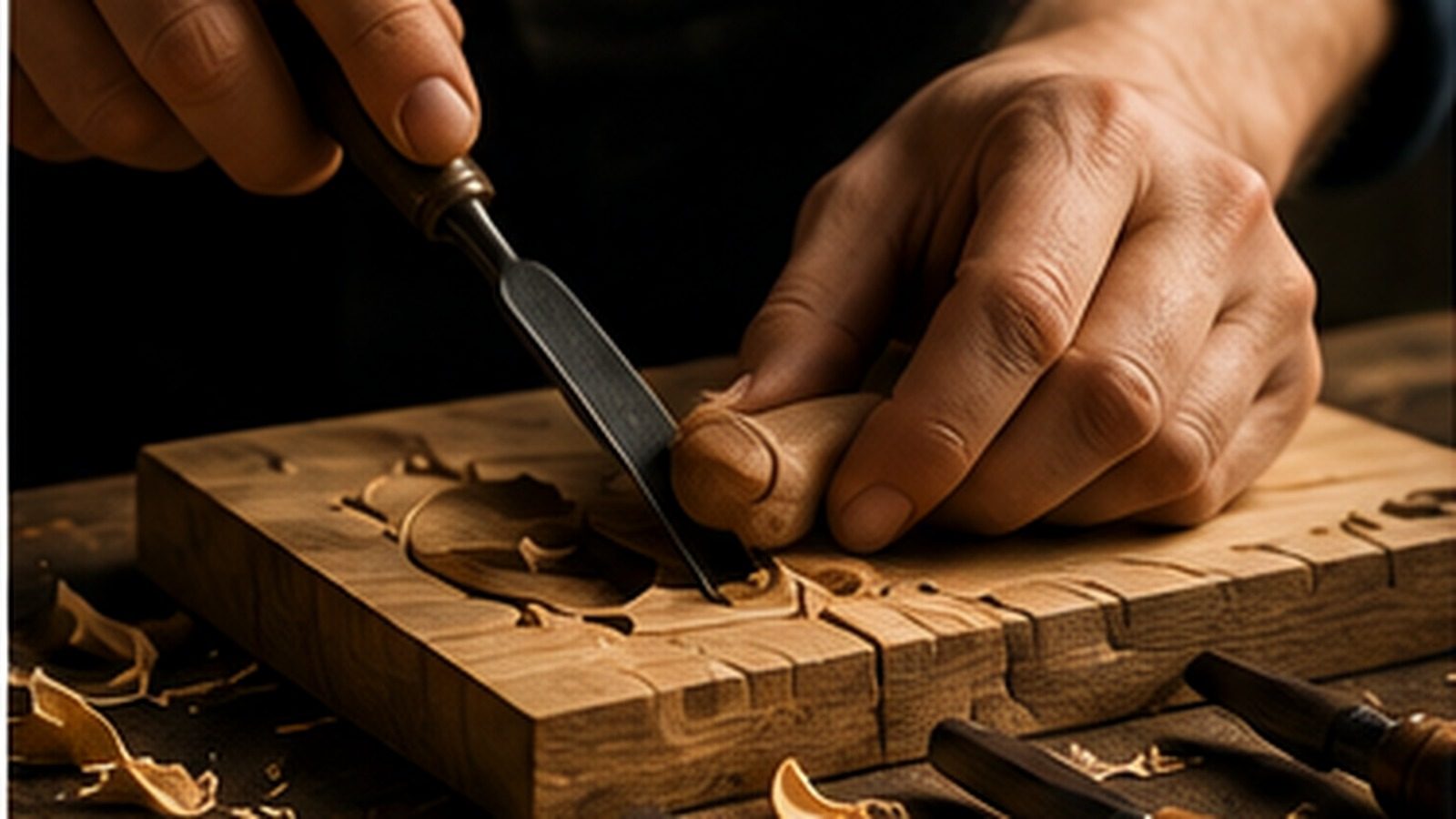
There has never been an easier time to make something. A logo appears in seconds. A campaign comes together before lunch. A week of social posts generates while you answer email. The ability to make has expanded. The ability to decide what deserves to be made has not. That gap is where craft begins.
Craft doesn't reject technology, speed, or growth. It refuses to confuse output with value. Noise asks how much we can produce; craft asks what is worth saying. Noise looks finished from across the room. Craft holds up when someone leans in. Our position is short: restraint is the canvas, truth is the signal.
Noise is work without a reason
Volume isn't the problem. A quiet website can be noise. So can a beautiful identity, a polished film, an expensive campaign. Work turns into noise when it can't answer a few questions. Why does this need to exist? Who is it for? What should it help them understand? What could we remove without losing the idea? When those go unanswered, design becomes decoration. The team picks what feels current, the client picks what feels familiar, and everyone adds a little more in case the idea isn't enough. Another message, another feature, another version for another platform, until the work holds everything except a point of view. Talented people make noise all the time. They just started without a center. Craft finds the center first.
Craft begins before design
We tend to file craft under execution: the careful letterform, the precise edit, the photograph caught at the right moment. Those matter, but craft starts earlier, with attention. Before anyone picks a typeface, someone has to understand what the company is trying to become. Before the words are written, someone has to find what is true, specific, and worth repeating. A beautifully made answer to the wrong question is still wrong. That's why strategy and craft belong together: strategy concentrates the problem, craft gives the answer integrity.
Clarity is a creative act, and restraint makes room for it
Clarity gets treated as the safe, less interesting option. Making something clear is rarely easy. It means understanding the subject well enough to cut what doesn't belong, choosing one important message over five defensible ones, and trading fashionable language for words people actually use. That's deciding, and deciding is creative work. The opposite of clarity isn't complexity; some ideas are genuinely complex and shouldn't be flattened past the truth. The opposite of clarity is confusion nobody took responsibility for resolving. Restraint is how you get there. It isn't emptiness for its own sake, and restrained work can still be loud, strange, and emotional. It just means every element had to justify its place. A defined audience, a clear position, a fixed running time, a truthful story: good constraints give creativity something to press against. Restraint doesn't shrink the work. It makes the idea easier to see.
Truth outlasts performance
Brands are under constant pressure to sound bigger, faster, more disruptive, more premium, more human than the evidence allows. Everyone reaches for the same adjectives, the language inflates, and eventually the audience stops hearing any of it. Truth takes another path. It starts with what the company actually does well, pays attention to the customers who benefit most, and finds the proof beneath the promise. Ambition still belongs in the work; good creative shows people what a company is becoming. The distance between the real company and the projected one just has to stay believable. A good story clarifies a truth. It doesn't manufacture one.
Tools should extend judgment, not replace it
Every era of creative work is shaped by its tools. The camera changed the image, the press changed the word, digital editing changed film. Generative systems are changing all of them at once, and new capability deserves curiosity and skill. But a tool can't decide what a business should stand for, which customer matters most, or whether a claim has been earned. It can't feel when a polished result has lost the character that made the company worth noticing, and it can't take responsibility for the work. The question was never whether a tool was used. It's whether judgment was used with it.
Details carry the whole
A detail isn't small just because it takes up little space. The wording of a button shows whether you respect the customer's uncertainty. The order of information shows whether the site was built around the visitor or the org chart. The sound under a film can flip the meaning of the image. People won't name every choice. They feel the sum of them, and craft lives in that sum. "No one will notice" is a weak standard. The audience may not point to the detail. They still feel its effect.
Not everything needs to be content
The pressure to stay visible has taught businesses to treat every thought, meeting, and milestone as material. Sometimes the right move is to publish. Sometimes it's to develop the idea further, or to say nothing and protect the signal. You don't build authority by having an instant opinion on everything. You build it by becoming consistently useful about one thing. A publishing schedule can create discipline. It shouldn't lower the bar for what you'll put your name on.
The standard
We look before we make. We ask what is true before what is impressive. We choose clarity over cleverness when cleverness hides the idea, and restraint over accumulation. We use technology with judgment. We revise without defending every first impulse. We care about the details people feel but never name. We make work for people, not platforms. We make fewer things when fewer is what the idea needs, and more when the story deserves room.
The world doesn't need another company adding to the volume because silence feels risky. It needs companies that know what they mean, stories grounded in something true, and work made with attention. Find the truth. Protect the signal. Make the work with care. Choose craft over noise.